A Local Guide to UK Stationery Shopping: Independent Shops, Markets and Online Retailers
October 09, 2026 - Stationery
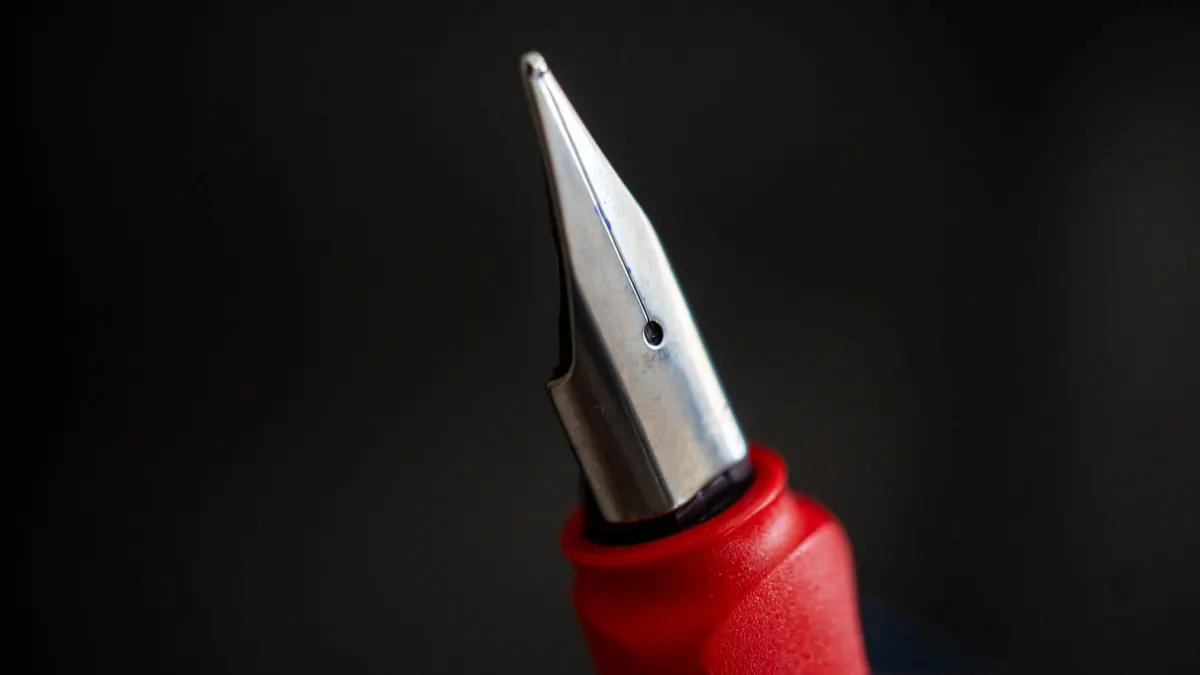
A fountain pen is not a complicated object, but it does ask one thing of you before you buy: a little thought about the way you actually write. Two decisions do most of the work — the nib size and the way the pen takes its ink. Get those right and almost any reasonably made pen will feel worth owning. Get them wrong and even an expensive one will end up in a drawer.
Nib charts are easy to read and almost useless on their own. What matters is the size of your letters, how much pressure you apply, and the paper you write on most often.
If your handwriting is small and tight, a finer nib keeps letters legible instead of filling them in. If you write large and loosely, a medium or broad nib gives your writing presence and hides small inconsistencies. If you press down hard when you write, a firm nib will feel more stable; if you write lightly, you may enjoy a nib with a little spring to it.
Left-handers can absolutely use fountain pens. The usual adjustments are practical rather than mysterious: a finer nib lays down less ink, so it dries faster and smudges less as your hand passes over the page, and quick-drying inks help further. An over-writer who pushes the nib across the page may notice more scratchiness than a pull stroke, which is another argument for a smooth, well-adjusted nib rather than the finest one available.
Finally, judge a pen on more than one paper. A nib that feels dry and scratchy on thin copier paper can feel delightful in a decent notebook, and the reverse is also true.
Most manufacturers label nibs extra-fine (EF), fine (F), medium (M) and broad (B), and occasionally extra-broad. Medium is the safest first choice — it suits most handwriting, shows off ink colour nicely and is forgiving on ordinary paper. Choose fine if your writing is small or you mostly use cheaper paper. Broad is a pleasure for signatures and headings, though it drinks ink and needs smoother paper.
Japanese nibs generally run finer than European or American nibs at the same stated size. A Japanese medium often writes close to a European fine. If you are choosing a Japanese pen and you are between two sizes, take the larger; if you are choosing a European pen and you are unsure, medium is rarely a mistake.
Two medium nibs from different makers can feel completely different in the hand. Beyond line width, notice two things. The first is feedback: some nibs glide almost silently, others give a faint sensation of the paper's texture, which many writers prefer because it feels controlled. The second is flow, or wetness. A wet nib lays down a richer, darker line but soaks through thin paper more readily; a dry nib looks more restrained and behaves better on poor paper. Neither is better — they suit different habits.
Gold nibs cost more, but they are not automatically smoother. Gold's real advantages are corrosion resistance and a springier feel in some designs. A well-made steel nib can be every bit as pleasant to write with, and if a steel nib feels scratchy, it is usually a matter of tine alignment rather than quality. For a first pen, put the difference into ink and paper instead.
Fountain pens take ink in one of two beginner-friendly ways. A cartridge is a sealed tube of ink that you push into the back of the section; when it runs out, you throw it away and push in another. A converter looks like a cartridge but has a filling mechanism, so you can draw ink up from a bottle. Pens described as cartridge/converter — sometimes shortened to C/C — accept both, which is exactly what you want in a first pen.
One rule is non-negotiable: use fountain pen ink only. India ink, drawing ink and calligraphy inks containing pigment or shellac will clog the feed, and the damage is often permanent.
Body material matters less than the details around it. A cap that seals well keeps the nib from drying out between sessions. A grip section wide enough for your fingers, and gently shaped rather than aggressively moulded, prevents cramping in longer writing sessions. A replaceable nib unit means you can swap a fine for a medium later, or replace a nib you have accidentally dropped, without buying a new pen.
Weight and balance matter too. Most pens can be used with the cap posted on the back or left off; if a pen feels top-heavy when posted, use it unposted. There is no correct answer here, only what your hand prefers.
Flexible nibs look romantic and demand a light, practised hand; they are a poor first choice. So are limited editions, vintage pens with unknown service history, custom nib grinds and exotic materials. None of them will make you enjoy writing more in your first year. Buy one reliable pen, one bottle of ink and one cartridge pack, and spend your money on paper instead.
If you have a pen shop or a good stationer nearby, ask to dip test. It takes two minutes and tells you more than any specification. Bear in mind that a freshly dipped nib writes wetter than it will once it is filled normally. If you order online, buy from a specialist that inspects nibs before dispatch, and check the returns policy. Starting with a single pen rather than a set is almost always the better move — you learn what you like from using it, not from owning several at once.
Write a page with it before you decide anything else. If the line feels thin, try a broader nib next time; if it skips, rinse the pen; if it feels rough, check the tines. A first fountain pen is a starting point, not a verdict, and the small adjustments you make along the way are half the pleasure of the hobby.
Where to find good stationery in the UK, from independent shops and market stalls to specialist online retailers,...
A practical guide to starting letter writing: choosing simple stationery, finding a reliable pen pal, writing a...
Copyright © 2026 Inkwell Lab. All Right Reserved.